Why Behind-the-Wheel Lessons Should Be Spaced Out

When families begin behind-the-wheel instruction, one of the first questions is often, “How quickly can we get the lessons done?”
It is an understandable question. Families are busy. Students have school, activities, sports, jobs, and family commitments. Once a student is eligible to begin behind-the-wheel instruction, it can feel tempting to complete the required hours as quickly as possible.
At Milestone Driving Academy, I take a different approach.
The six hours of behind-the-wheel instruction are important, but they are only one part of the learning process. In Minnesota, teen drivers also need many hours of supervised practice outside of formal lessons. That practice time is where students begin turning instruction into habit.
That is why spacing lessons out matters.
Learning to Drive Takes Time
Driving is not just about learning a checklist of skills. Students are learning how to observe, anticipate, make decisions, manage speed, communicate with other drivers, and stay calm in changing traffic situations.
Those skills develop over time.
A student may understand a concept during a lesson, but they still need repeated practice before it becomes natural. Spacing lessons gives students time to practice what they learned, build confidence, and return to the next lesson ready for the next step.
Practice Between Lessons Is Essential
Behind-the-wheel instruction works best when there is meaningful practice between sessions.
After each lesson, students and parents receive a lesson evaluation. This includes notes about what we worked on, areas of progress, skills that still need attention, and suggested focus areas for practice before the next lesson. There is also a place for student reflection, because learning to drive is not just about what happens during the lesson. It is also about helping students think about their own growth, confidence, and decision-making.
Those practice areas might include lane position, turns, speed control, scanning intersections, parking, or decision-making in traffic.
When students practice those skills before the next lesson, the next session becomes more productive. Instead of simply repeating the same material, the instructor can build on progress and introduce new challenges when the student is ready.
Three Lessons Should Have a Purpose
The required six hours are typically completed in three two-hour lessons. At Milestone Driving Academy, those lessons are not treated as isolated appointments. They are part of a larger plan.
The first lesson often begins in a more controlled setting, especially if the student is newer or less confident. From there, instruction builds based on comfort, readiness, and skill development.
Each two-hour session is also broken into smaller segments. Two hours of straight driving can be a lot for anyone, especially a new driver. Smaller mini-lessons allow time to focus on specific skills, pause for feedback, reset when needed, and then move into the next part of the lesson.
The Permit Timeline Gives Families Room
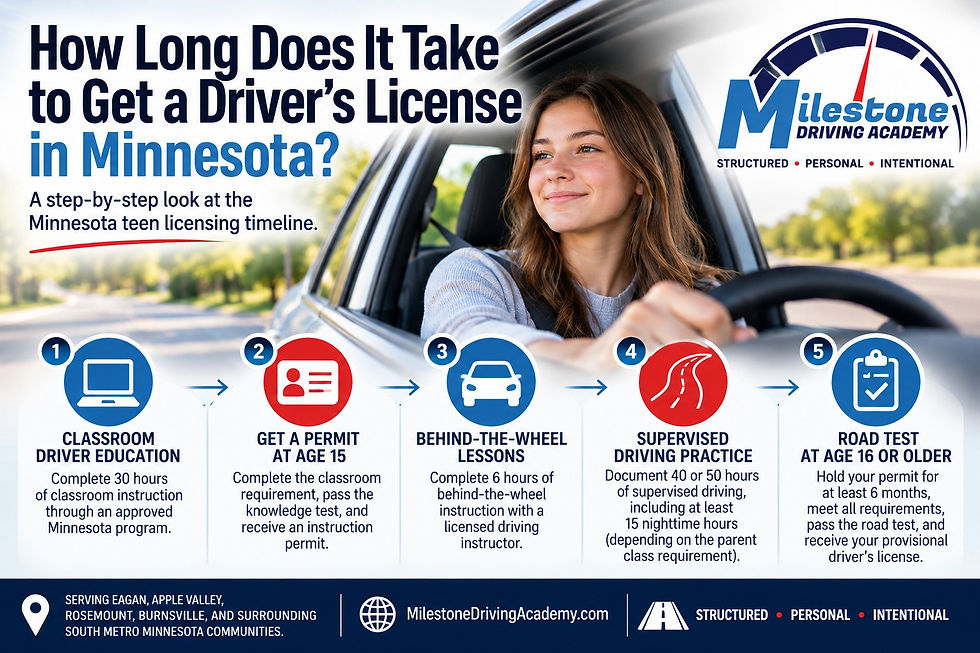
Minnesota requires students to hold their permit for at least six months before taking the license exam. Depending on when a student receives their permit, the overall timeline may be closer to six months or closer to 12 months.
That time should be used intentionally.
Rather than rushing to complete the required lessons early, families can think about when each lesson will be most helpful. A well-timed lesson can support the student’s growth, guide practice at home, and help prepare them for more independent driving over time.
A More Intentional Approach
Every student is different. Some students are eager and confident. Others are nervous and need more time. Some families practice often, while others need help building a plan.
Spacing lessons out allows instruction to match the student instead of forcing every student into the same timeline.
At Milestone Driving Academy, the goal is not simply to complete six hours. The goal is to help students build safe habits, make better decisions, and become more prepared for real-world driving.
That takes time, practice, and a thoughtful plan.
Getting Started
Enrollment begins with a parent consultation. During that conversation, we talk through the student’s timeline, permit status, schedule, and readiness so lessons can be spaced in a way that makes sense.
Behind-the-wheel instruction should feel structured, personal, and intentional from the beginning.