Common Mistakes New Drivers Make (And How Parents Can Help)

Learning to drive is exciting, but it can also feel overwhelming. Experienced drivers make hundreds of decisions almost automatically, while new drivers are still learning how to process information, anticipate problems, and manage several tasks at the same time.
Making mistakes is a normal part of the learning process. In fact, mistakes often create some of the best learning opportunities. The goal is not perfection. The goal is to identify mistakes, learn from them, and gradually build safe driving habits over time.
Looking Too Close to the Vehicle
One of the most common mistakes new drivers make is focusing only on the vehicle directly in front of them. When drivers look too close to the front of the vehicle, they have less time to identify potential hazards and make adjustments.
Experienced drivers constantly scan farther down the road while also checking mirrors and monitoring their surroundings. Looking ahead helps drivers recognize changing traffic conditions, upcoming intersections, and potential hazards before they become immediate problems.
Parents can help by asking simple questions during practice drives such as, "What do you see ahead?" or "What might happen next?" These conversations encourage students to think beyond the vehicle immediately in front of them and develop stronger awareness.
Speed Management
Many new drivers struggle with speed control. Some students drive too slowly because they are nervous, while others unintentionally exceed the speed limit because they are focused on steering, traffic, and everything happening around them.
Developing a consistent awareness of speed takes practice. Students should learn to check their speed regularly and understand how road conditions, traffic, weather, and visibility can affect appropriate driving speeds.
Safe driving is not just about following the speed limit. It is also about adjusting to changing conditions and making good decisions behind the wheel.
Intersections Require Active Scanning
Intersections are one of the busiest places a driver encounters. Many new drivers focus only on the traffic signal or stop sign and forget to actively scan for pedestrians, cyclists, turning vehicles, and other hazards.
Developing a consistent scanning routine can improve both safety and confidence. Before entering an intersection, students should learn to look left, right, and left again while continuing to monitor traffic as they proceed.
These habits become more natural over time, but they require intentional practice during the permit period.
Learning Patience Behind the Wheel
New drivers often feel pressure to make decisions quickly. This can lead to rushed lane changes, hurried turns, or entering traffic gaps that are smaller than necessary.
One of the most valuable lessons a student can learn is that they usually have more time than they think. In many situations, waiting for a larger gap or a clearer opportunity is the safer choice.
Patience is an important driving skill. Learning when not to go is often just as important as learning when to go.
Mistakes Are Part of Learning
Missing a turn, braking too hard, parking poorly, or forgetting a signal does not mean a student is failing. It means they are learning.
The permit period exists to give students time to gain experience, make corrections, and build confidence. Every experienced driver has made mistakes while learning.
Parents can help by focusing on progress rather than perfection. Encouragement, reflection, and consistent practice help students develop confidence over time.
The Parent's Role in Driver Education
One thing I tell every family is that the most important driving instructor is often the parent or guardian.
Behind-the-wheel lessons are important, but students spend many more hours practicing with their families throughout the permit period. Those practice hours provide opportunities to reinforce good habits, build confidence, and help students learn from mistakes.
Parents do not need to have all the answers. Their role is to provide opportunities for practice, ask good questions, and support their student throughout the learning process.
Building Safe Driving Habits Takes Time
Learning to drive is not about becoming perfect. It is about making steady progress over time.
Safe driving habits are built through repetition, experience, reflection, and practice. Every student learns at a different pace, and that is completely normal.
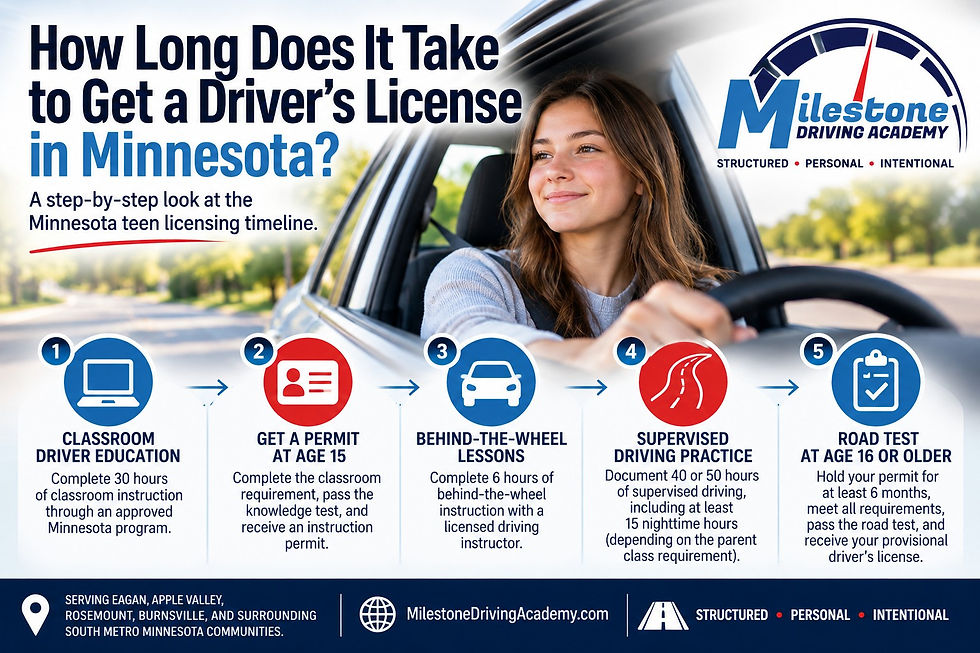
At Milestone Driving Academy, the goal is not simply to complete six hours of behind-the-wheel instruction. The goal is to help students become safe, confident, and responsible drivers who can make good decisions long after they receive their license.